When the idea of Future Lab was first presented to the HB&P Trustees, I was immediately keen to get involved. It felt like a refreshing way to approach organisational change: testing ideas, creating space to learn and using research and innovation to think ambitiously about the future.
I volunteered to be involved across Future Lab, Future Lab Innovation Committee (FLIC) and Future Lab Advisory Group (FLAG) because I could see the opportunity to be part of an exciting new way of thinking in the sector, and following the 100-year anniversary of HB&P, this was a chance to help shape what the charity could become over the next 100 years.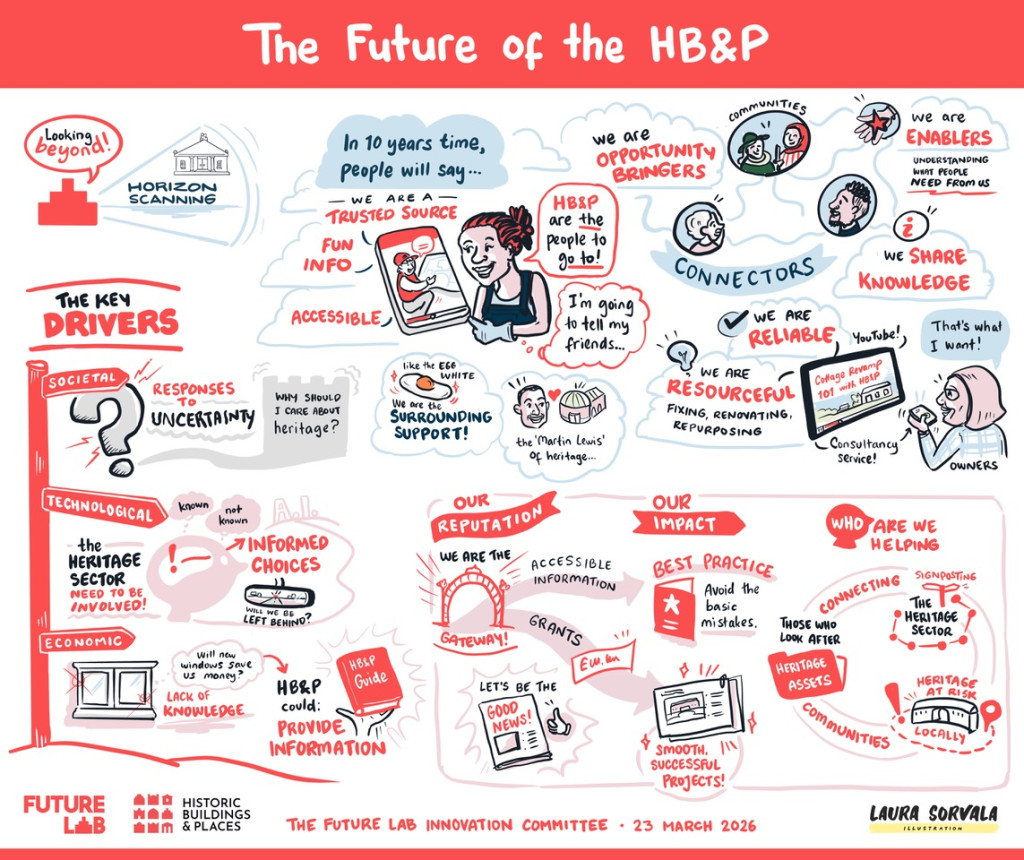
The conversations across the groups have been creative, thought-provoking and, at times, challenging. As a co-chair of FLIC, one of the most interesting parts has been helping to shape those conversations. The challenge has never been a lack of ideas. In fact, initially it was almost the opposite: we had lots of ideas, perspectives and possibilities, but needed to find the thread that connected them and gave us a clearer sense of purpose.
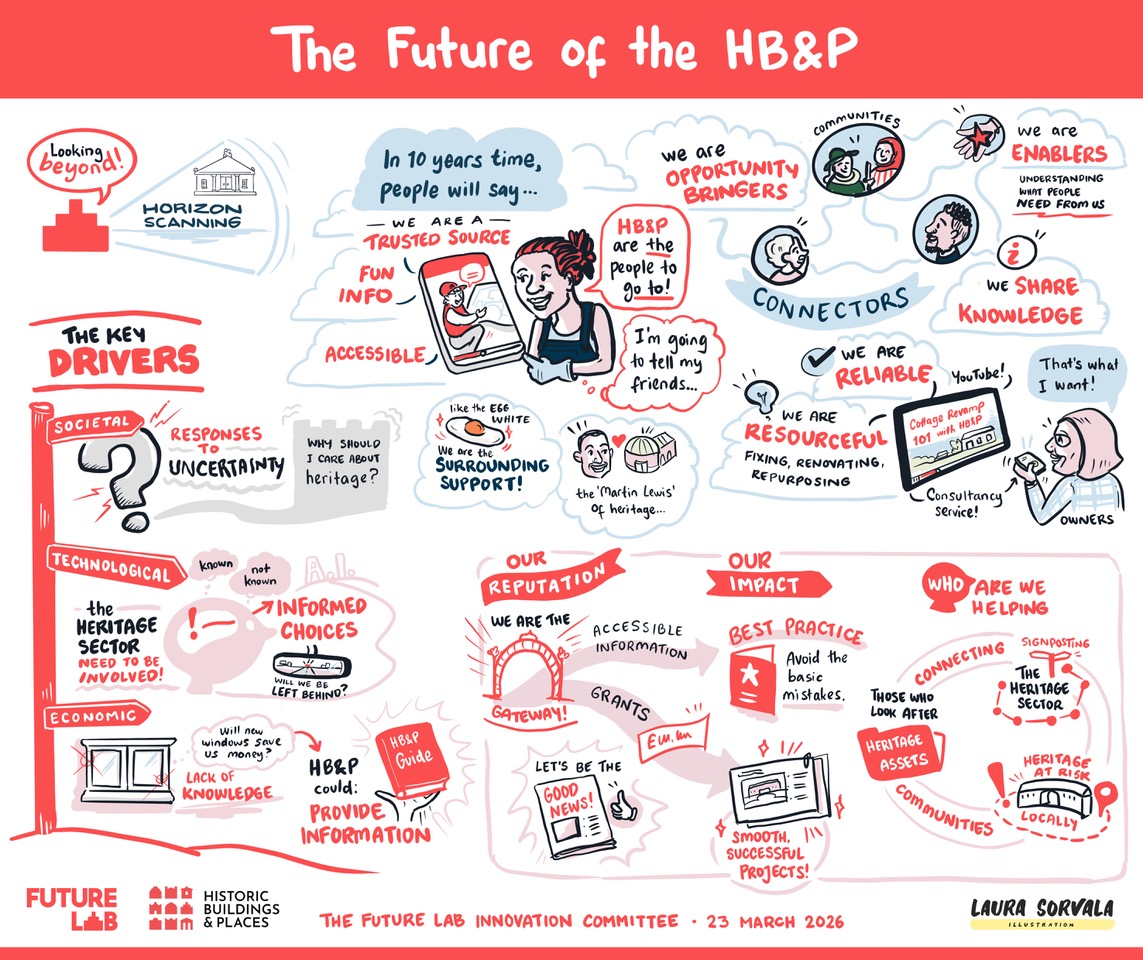
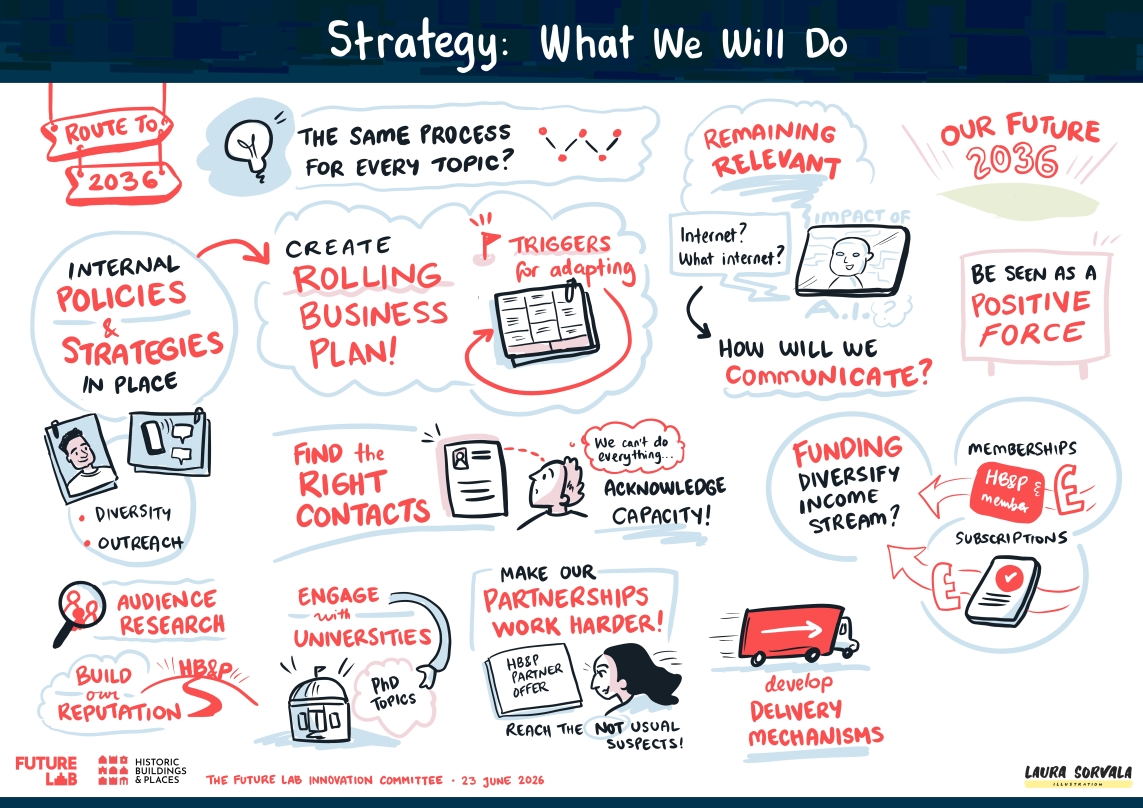
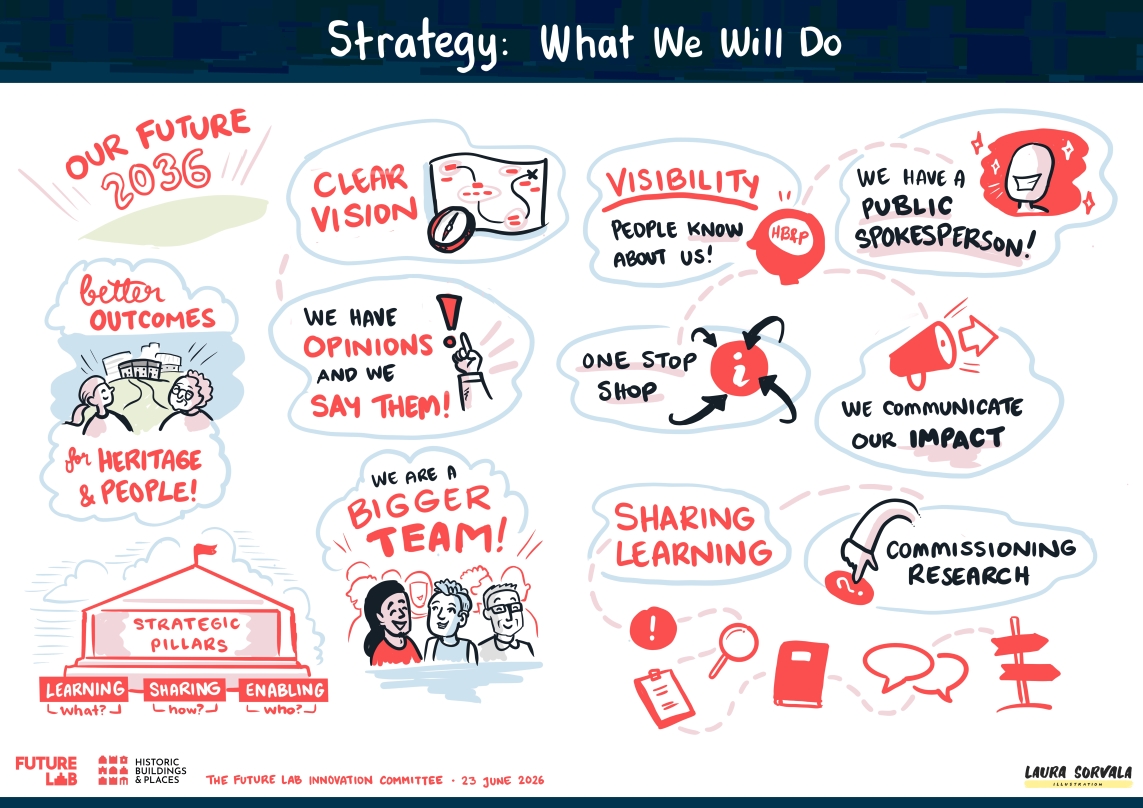
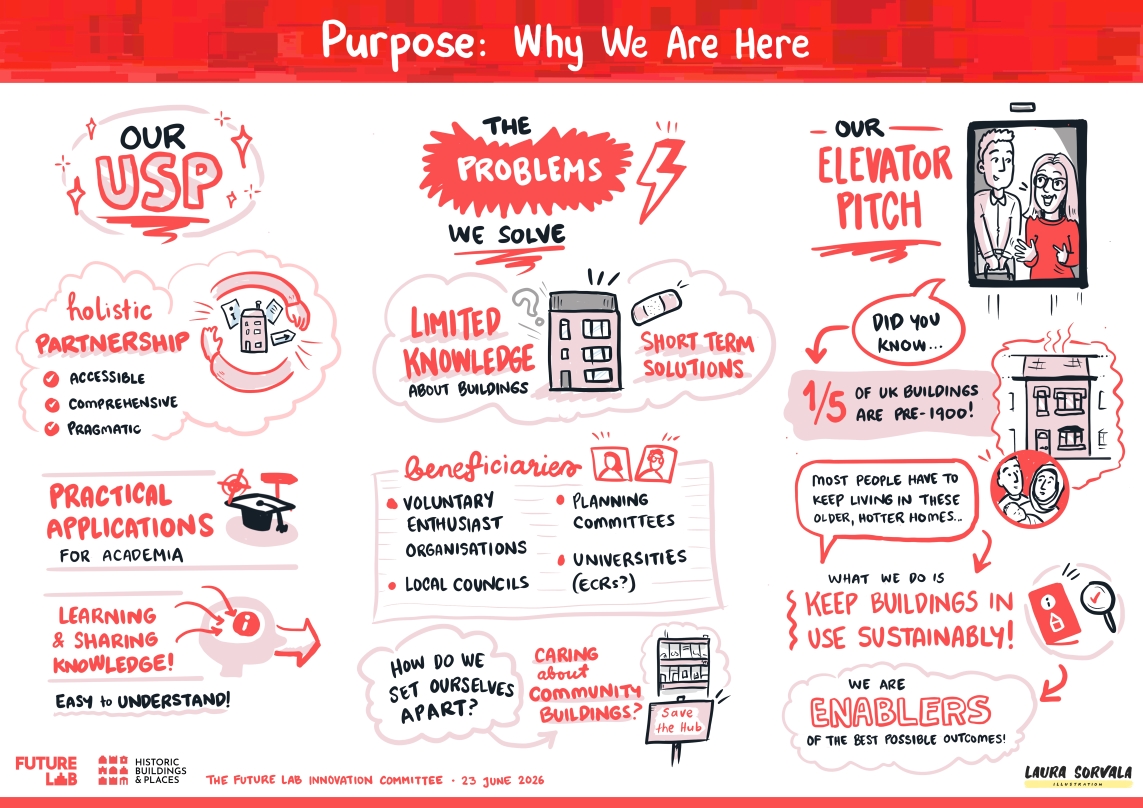
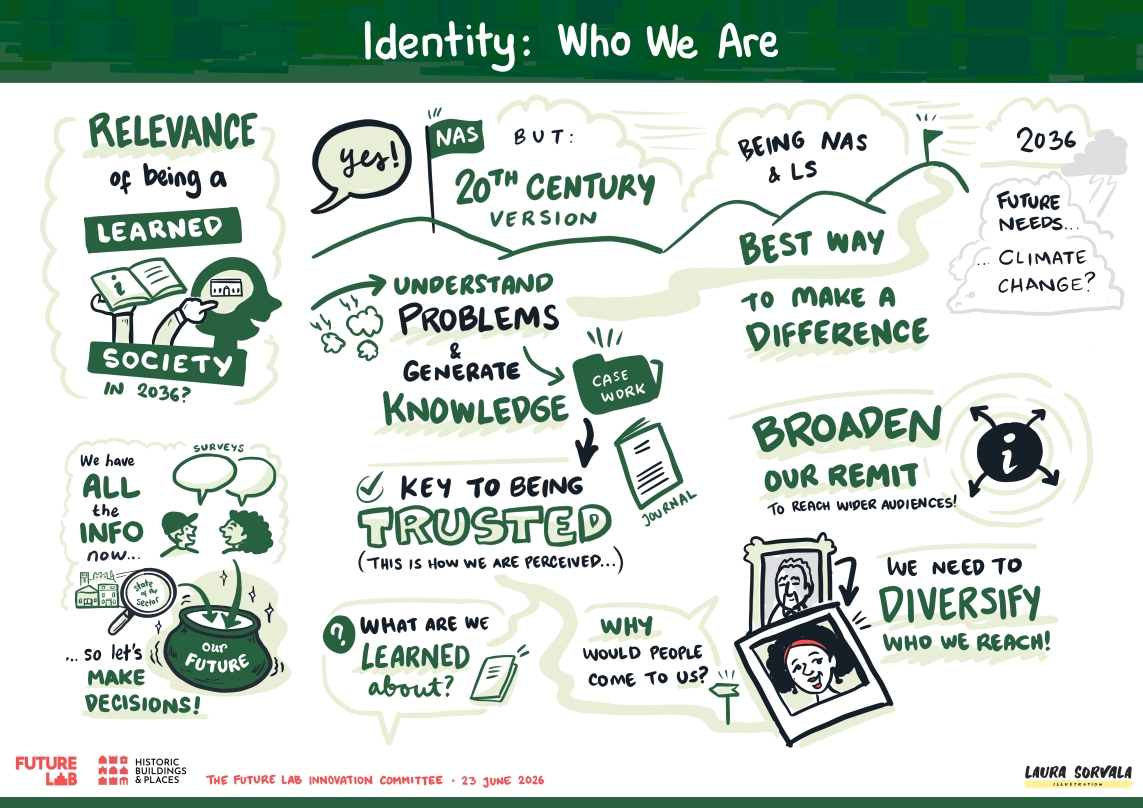
Looking back at the illustrations by Laura Sorvala from the first two FLIC meetings, I find them really inspiring. At the beginning of the Future Lab journey, there were very different views about how HB&P might adapt for the future and where our focus should be. We hadn’t yet found a shared direction, and that uncertainty was an important part of the process.
Through Future Lab’s creative approach, we were able to explore ideas openly, question assumptions and follow conversations without feeling that we had to arrive at the answer immediately. What surprised me was that the broader our thinking became, the clearer our purpose seemed to get. Exploring more possibilities ultimately helped us narrow our focus.
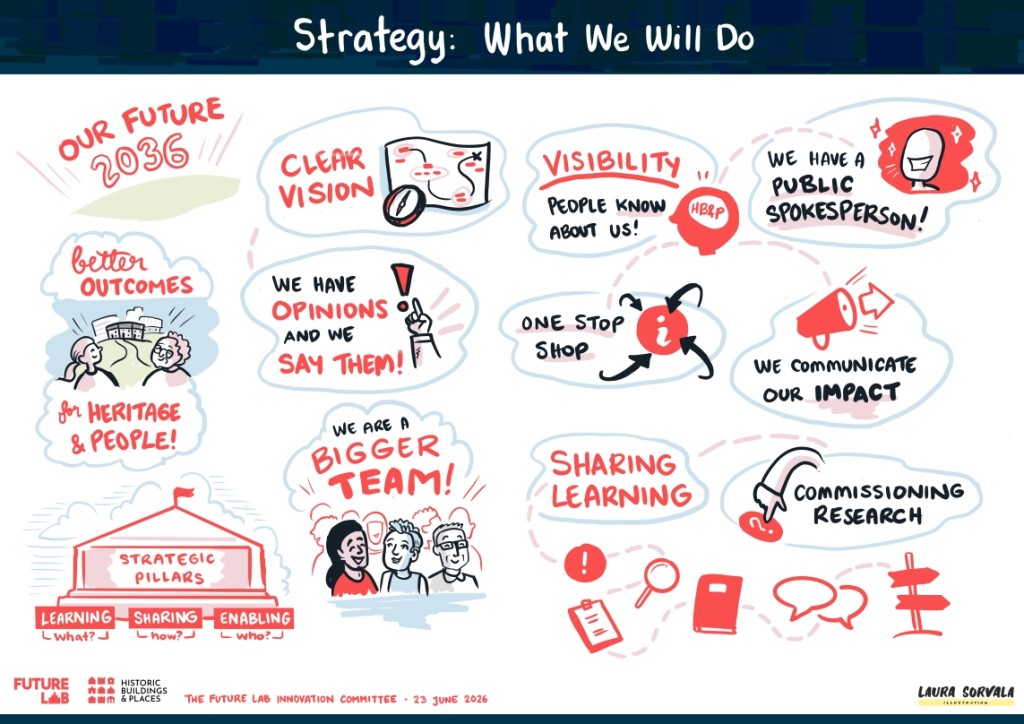
That became particularly clear when we landed on the strategic pillars of Learning, Sharing and Enabling. You can see these threads being explored and then becoming the basis of our thinking through the fantastic illustrations that captured the sessions visually. Since then, those ideas have provided a powerful framework for the conversations and decisions that have followed.
Being involved in both FLIC and FLAG has also brought together different perspectives and experiences. That mix is incredibly valuable. It challenges you to look beyond your own area of expertise and think about what HB&P can contribute to people, communities and the wider sector.
As a Trustee with a background in marketing and communications, I can see how my own experience and skills can contribute to that future, but I have also found the process has encouraged me to think more broadly about what meaningful organisational change looks like.
I’m excited to see where the next stage of Future Lab takes us. For me, the real opportunity isn’t simply to shape the future of HB&P as an organisation, but to think ambitiously about the impact it can have on people, communities and the sector for many years to come.